• Deportes
  • Entretenimiento
  • Mundo
  • Negocio
  • Noticias
  • Salud
  • Tecnología
Notiulti
Noticias Ultimas
Inicio » Invasive species
Tag:

Invasive species

Mundo

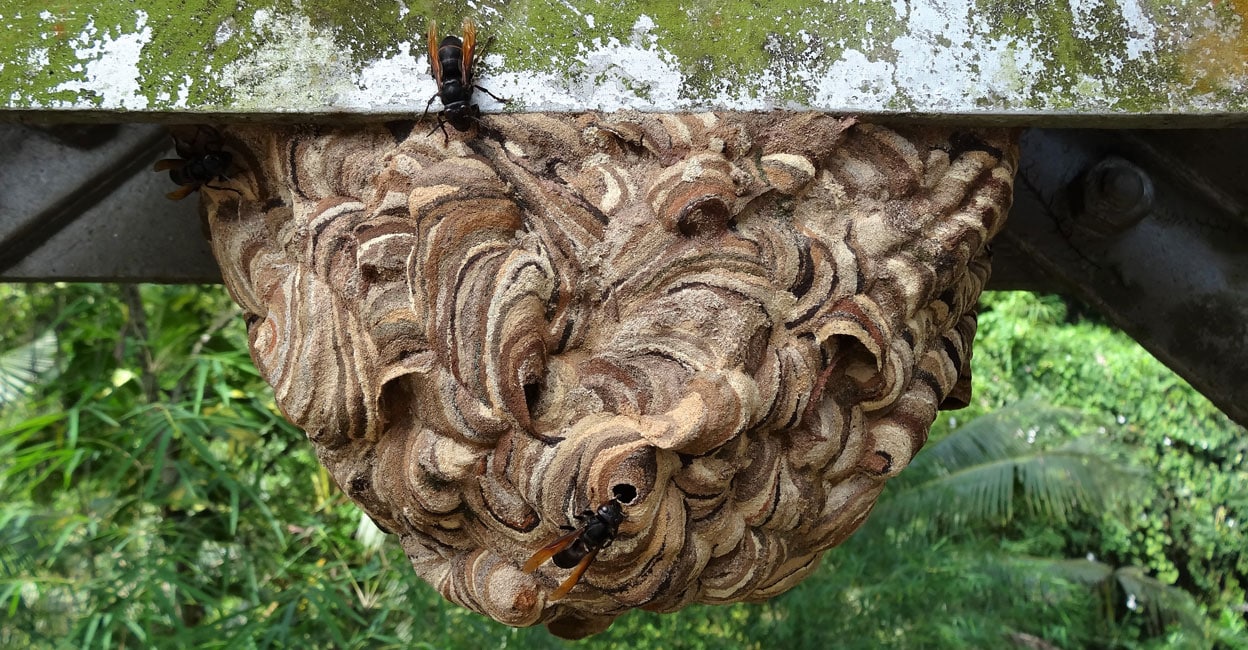
Miles de avispas asesinas habitan nidos subterráneos gigantes

by Editor de Mundo mayo 29, 2026
written by Editor de Mundo

Descubren colonias masivas de avispas asesinas bajo tierra

Un reciente hallazgo ha sorprendido a los expertos debido a la magnitud y complejidad de los nidos construidos por una especie de avispas, conocidas coloquialmente como «avispas asesinas». Según los reportes, estas estructuras no se encuentran en los lugares habituales, sino que están ubicadas bajo el nivel del suelo.

La investigación destaca la naturaleza intrincada de estos refugios subterráneos, los cuales han sido descritos como construcciones de gran tamaño. Lo más alarmante para los especialistas es la densidad poblacional dentro de estas colonias, donde habitan miles de ejemplares de esta especie agresiva.

La capacidad de estos insectos para organizar y edificar estructuras tan complejas en el subsuelo plantea nuevas interrogantes sobre su comportamiento y los riesgos que representan al establecer sus nidos en áreas que pueden pasar desapercibidas hasta que la colonia alcanza dimensiones considerables.

¿Cómo quitar nidos subterráneos de avispas?@mielmaraseo
mayo 29, 2026 0 comments
0 FacebookTwitterPinterestLinkedinEmail
Noticias

Occurrence and environmental data for aquatic plants of Minnesota from 1999–2018

by Diego Ramírez – Managing Editor marzo 11, 2026
written by Diego Ramírez – Managing Editor
  • Perleberg, D. J. & Radomski, P. J. A century of change in Minnesota’s lake plant communities. Aquat. Bot. 173, 103401, https://doi.org/10.1016/j.aquabot.2021.103401 (2021).


    Google Scholar
     

  • Kanninen, A., Hellsten, S. & Hämäläinen, H. Comparing stressor-specific indices and general measures of taxonomic composition for assessing the status of boreal lacustrine macrophyte communities. Ecol. Indic. 27, 29–43, https://doi.org/10.1016/j.ecolind.2012.11.012 (2013).


    Google Scholar
     

  • Phillips, G., Willby, N. & Moss, B. Submerged macrophyte decline in shallow lakes: What have we learnt in the last forty years. Aquat. Bot. 135, 37–45, https://doi.org/10.1016/j.aquabot.2016.04.004 (2016).


    Google Scholar
     

  • Søndergaard, M. et al. Submerged macrophytes as indicators of the ecological quality of lakes. Freshw. Biol. 55, 893–908, https://doi.org/10.1111/j.1365-2427.2009.02331.x (2010).


    Google Scholar
     

  • Baastrup-Spohr, L. et al. Remarkable richness of aquatic macrophytes in 3-years old re-established Lake Fil, Denmark. Ecol. Eng. 95, 375–383, https://doi.org/10.1016/j.ecoleng.2016.06.081 (2016).


    Google Scholar
     

  • Mikulyuk, A. et al. Is the cure worse than the disease? Comparing the ecological effects of an invasive aquatic plant and the herbicide treatments used to control it. FACETS 5, 353–366, https://doi.org/10.1139/facets-2020-0002 (2020).


    Google Scholar
     

  • Alahuhta, J. et al. Macroecology of macrophytes in the freshwater realm: Patterns, mechanisms and implications. Aquat. Bot. 168, 103325, https://doi.org/10.1016/j.aquabot.2020.103325 (2021).


    Google Scholar
     

  • O’Hare, M. T. et al. Plants in aquatic ecosystems: current trends and future directions. Hydrobiologia 812, 1–11, https://doi.org/10.1007/s10750-017-3190-7 (2018).


    Google Scholar
     

  • Wilkinson, M. D. et al. The FAIR Guiding Principles for scientific data management and stewardship. Sci. Data 3, 160018, https://doi.org/10.1038/sdata.2016.18 (2016).


    Google Scholar
     

  • Verhoeven, M. R., Larkin, D. J. & Newman, R. M. Constraining invader dominance: Effects of repeated herbicidal management and environmental factors on curlyleaf pondweed dynamics in 50 Minnesota lakes. Freshw. Biol. 65, 849–862, https://doi.org/10.1111/fwb.13468 (2020).


    Google Scholar
     

  • Alahuhta, J. & García‐Girón, J. Patterns and mechanisms underlying ecoregion delineation in North American freshwater plants. J. Biogeogr. 49, 142–155, https://doi.org/10.1111/jbi.14289 (2022).


    Google Scholar
     

  • García-Girón, J. et al. Global patterns and determinants of lake macrophyte taxonomic, functional and phylogenetic beta diversity. Sci. Total Environ. 723, 138021, https://doi.org/10.1016/j.scitotenv.2020.138021 (2020).


    Google Scholar
     

  • Muthukrishnan, R., Hansel-Welch, N. & Larkin, D. J. Environmental filtering and competitive exclusion drive biodiversity-invasibility relationships in shallow lake plant communities. J. Ecol. 106, 2058–2070, https://doi.org/10.1111/1365-2745.12963 (2018).


    Google Scholar
     

  • Lindholm, M., Alahuhta, J., Heino, J. & Toivonen, H. Temporal beta diversity of lake plants is determined by concomitant changes in environmental factors across decades. J. Ecol. 109, 819–832, https://doi.org/10.1111/1365-2745.13508 (2021).


    Google Scholar
     

  • Madsen, J. D. Point Intercept and Line Intercept Methods for Aquatic Plant Management: https://apps.dtic.mil/sti/citations/ADA361270 (1999).

  • Madsen, J. D. & Wersal, R. M. A review of aquatic plant monitoring and assessment methods. J Aquat Plant Manage 12 (2017).

  • Mikulyuk, A. et al. Testing a methodology for assessing plant communities in temperate inland lakes. Lake Reserv. Manag. 26, 54–62, https://doi.org/10.1080/07438141003666848 (2010).


    Google Scholar
     

  • McComas, S. R., Christianson, Y. E. & Singh, U. Effects of curlyleaf pondweed control on water quality and coontail abundance in Gleason Lake, Minnesota. Lake Reserv. Manag. 31, 109–114, https://doi.org/10.1080/10402381.2015.1014583 (2015).


    Google Scholar
     

  • Johnson, J. A., Jones, A. R. & Newman, R. M. Evaluation of lakewide, early season herbicide treatments for controlling invasive curlyleaf pondweed (Potamogeton crispus) in Minnesota lakes. Lake Reserv. Manag. 28, 346–363, https://doi.org/10.1080/07438141.2012.744782 (2012).


    Google Scholar
     

  • Kujawa, E. R. et al. Lessons from a decade of lake management: effects of herbicides on Eurasian watermilfoil and native plant communities. Ecosphere 8, https://doi.org/10.1002/ecs2.1718 (2017).

  • Verhoeven, M. R., Glisson, W. J. & Larkin, D. J. Niche models differentiate potential impacts of two aquatic invasive plant species on native macrophytes. Diversity 12, 162, https://doi.org/10.3390/d12040162 (2020).


    Google Scholar
     

  • Thomas, S. M., Verhoeven, M. R., Walsh, J. R., Larkin, D. J. & Hansen, G. J. A. Species distribution models for invasive Eurasian watermilfoil highlight the importance of data quality and limitations of discrimination accuracy metrics. Ecol. Evol. 11, 12567–12582, https://doi.org/10.1002/ece3.8002 (2021).


    Google Scholar
     

  • Thomas, S. M., Verhoeven, M. R., Walsh, J. R., Larkin, D. J. & Hansen, G. J. A. Improving species distribution forecasts by measuring and communicating uncertainty: An invasive species case study. Ecology 105, e4297, https://doi.org/10.1002/ecy.4297 (2024).


    Google Scholar
     

  • Verhoeven, M. Community assembly, invasion, and management of aquatic plant communities. https://conservancy.umn.edu/bitstreams/dffabbce-1280-4454-9530-e8ec31a0502e/download (University of Minnesota – Twin Cities, Saint Paul, MN, 2022).

  • Verhoeven, M. R. & Larkin, D. J. Complete data and code to generate datasets in: Occurrence and environmental data for aquatic plants of Minnesota from 1999–2018. Data Repository for the University of Minnesota https://doi.org/10.13020/av1t-c667 (2024).

  • Verhoeven, M. R., Larkin, D. J. & Newman, R. M. Complete Data and Analysis for: Constraining invader dominance: Effects of repeated herbicidal management and environmental factors on curlyleaf pondweed dynamics in 50 Minnesota lakes. https://doi.org/10.13020/aw92-e606 (2020).

  • Hauxwell, J. S. et al. Recommended Baseline Monitoring of Aquatic Plants in Wisconsin: Sampling Design, Field and Laboratory Procedures, Data Entry and Analysis, and Applications. 51 (2010).

  • Perleberg, D. et al. Minnesota Lake Plant Survey Manual, Version 3, for Use by Fisheries Section, EWR Lake Unit, and EWR Minnesota Biological Survey Unit. 150, https://doi.org/10.13140/RG.2.2.15745.57444 (2019).

  • Johnson, J. A. & Newman, R. M. A comparison of two methods for sampling biomass of aquatic plants. J. Aquat. Plant Manag. 8 (2011).

  • Rodusky, A. J., Sharfstein, B., East, T. L. & Maki, R. P. A comparison of three methods to collect submerged aquatic vegetation in a shallow lake. Environ. Monit. Assess. 110, 87–97, https://doi.org/10.1007/s10661-005-6338-2 (2005).


    Google Scholar
     

  • Capers, R. S. A comparison of two sampling techniques in the study of submersed macrophyte richness and abundance. Aquat. Bot. 68, 87–92, https://doi.org/10.1016/S0304-3770(00)00102-9 (2000).


    Google Scholar
     

  • Owens, C. S., Smart, R. M., Williams, P. E. & Spickard, M. R. Comparison of three biomass sampling techniques on submersed aquatic plants in a Northern tier lake. U.S. Army Engineer Researchand Development Center, https://apps.dtic.mil/sti/html/tr/ADA525140/ (2010).

  • Yin, Y. & Kreiling, R. M. The evaluation of a rake method to quantify submersed vegetation in the Upper Mississippi River. Hydrobiologia 675, 187–195, https://doi.org/10.1007/s10750-011-0817-y (2011).


    Google Scholar
     

  • Chadde, S. Wetland Plants of Minnesota: A Complete Guide to the Wetland and Aquatic Plants of the North Star State. (Steve W. Chadde, 2012).

  • Skawinski, P. Aquatic Plants of the Upper Midwest, 4th Edition: A Photographic Guide to Our Underwater Forests. (Paul Skawinski, Wisconsin, 2019).

  • Crow, G. E. & Hellquist, C. B. Aquatic and Wetland Plants of Northeastern North America. (University of Wisconsin Press, Madison, WI, 2006).

  • Vitense, K. & Hansen, G. J. A. Nonlinear water clarity trends and impacts on littoral area in Minnesota lakes. Limnol. Oceanogr. Lett. 8, 657–665, https://doi.org/10.1002/lol2.10323 (2023).


    Google Scholar
     

  • Metadata: DNR Hydrography Dataset. Minnesota Department of Natural Resources, St. Paul, MN. https://resources.gisdata.mn.gov/pub/gdrs/data/pub/us_mn_state_dnr/water_dnr_hydrography/metadata/metadata.html.

  • Metadata: DNR Watersheds – DNR Level 08 – All Catchments. Minnesota Department of Natural Resources, St. Paul, MN. https://resources.gisdata.mn.gov/pub/gdrs/data/pub/us_mn_state_dnr/geos_dnr_watersheds/metadata/dnr_watersheds_dnr_level_08_all_catchments.html.

  • Boyle, B. et al. The taxonomic name resolution service: an online tool for automated standardization of plant names. BMC Bioinformatics 14, 16, http://www.biomedcentral.com/1471-2105/14/16 (2013).


    Google Scholar
     

  • Chamberlain, S. A. & Szöcs, E. taxize: taxonomic search and retrieval in R [version 2; peer review: 3 approved]. F1000Research 2, 191, https://doi.org/10.12688/f1000research.2-191.v2 (2013).


    Google Scholar
     

  • MNTaxa: The State of Minnesota Vascular Plant Checklist. MinnesotaDepartment of Natural Resources, St. Paul, MN (2013).

  • Chase, J. M. & Knight, T. M. Scale-dependent effect sizes of ecological drivers on biodiversity: why standardised sampling is not enough. Ecol. Lett. 16, 17–26, https://doi.org/10.1111/ele.12112 (2013).


    Google Scholar
     

  • Wood, S. N., Pya, N. & Säfken, B. Smoothing parameter and model selection for general smooth models. J. Am. Stat. Assoc. 111, 1548–1563, https://doi.org/10.1080/01621459.2016.1180986 (2016).


    Google Scholar
     

  • marzo 11, 2026 0 comments
    0 FacebookTwitterPinterestLinkedinEmail
    • Aviso Legal
    • Política de Cookies
    • Términos y Condiciones
    • Política de Privacidad
    • CONTACTO
    • Política de Correcciones
    • Equipo Editorial
    • Política Editorial
    • SOBRE NOTIULTI

    El servicio de alojamiento web más recomendado. Para quejas, abusos o publicidad, contacte: admin@notiulti.com


    Back To Top
    Notiulti
    • Deportes
    • Entretenimiento
    • Mundo
    • Negocio
    • Noticias
    • Salud
    • Tecnología