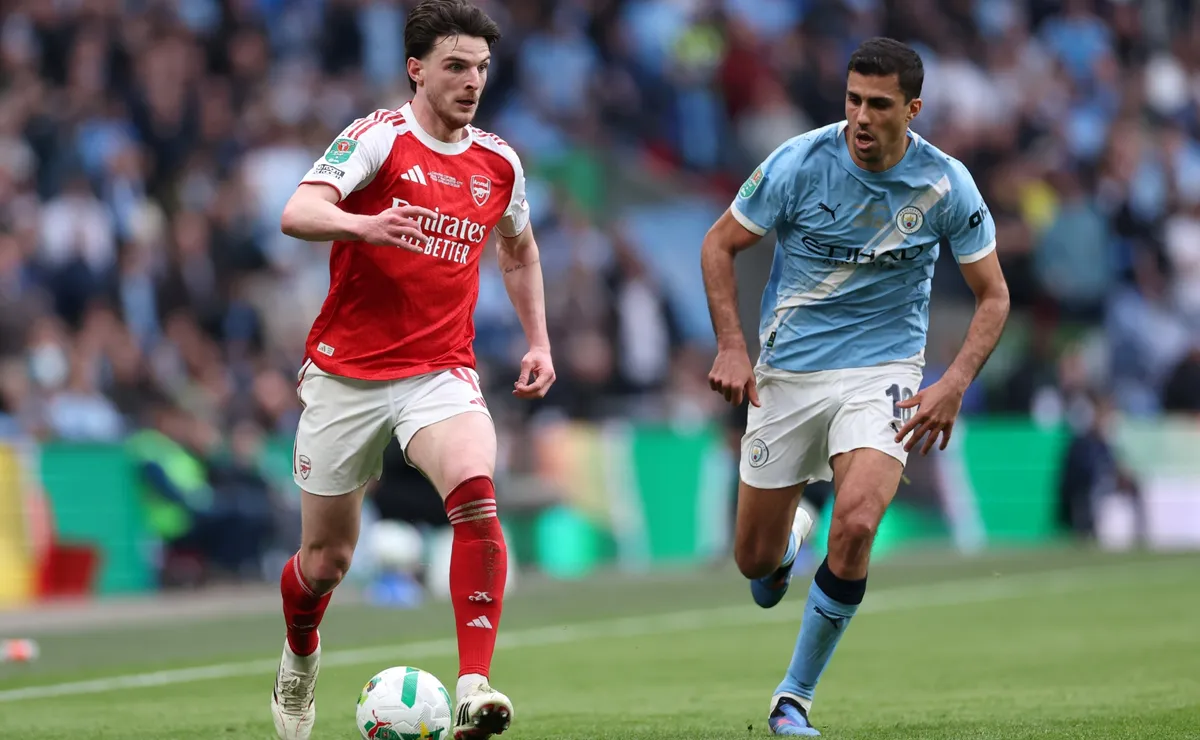
We are given only a fragment of text:
"En la previa del partido, nuestro analista presenta los tres mejores pronósticos para que contemples antes de realizar tus apuestas. Los Ciudadanos …."
This is incomplete and appears to be cut off. Notice no complete sentences, no factual content beyond the mention of an analyst presenting three top predictions before a match for betting consideration, and a reference to "Los Ciudadanos" (which likely refers to Manchester City, given the context of sports betting and common usage in Spanish football media).
Still, per the instructions:
- We must use ONLY the facts contained in the provided input.
- We must not invent or add new data, quotes, numbers, or context.
- We must output only the article body HTML in Spanish, rewritten for clarity and journalistic style, but strictly based on the given text.
- We must preserve any embeds or images exactly — but none are present in the given text.
- We may remove layout/ads/tracking elements — none are present.
- We must rewrite readable text in
<p>,<h2>, etc., but only what is given.
Given that the input is a fragment and incomplete, One can only work with what is explicitly stated:
Facts present:
- It is the eve of a match.
- An analyst presents the three best predictions.
- The purpose is for readers to consider them before placing bets.
- Reference to "Los Ciudadanos" (a nickname for Manchester City in Spanish-speaking media).
No teams, match, competition, date, analyst name, or actual predictions are named.
We cannot invent any of that.
the rewritten article body must reflect only these facts, in clear, dynamic, professional Spanish, without adding anything.
We can structure it logically: a short lead, then the core information.
But note: we must not add context. So we cannot say "en el partido entre X e Y" — that would be inventing.
We can only say what is given.
Let’s rewrite the given text into a proper journalistic style in Spanish, using only the provided fragments.
Original:
"En la previa del partido, nuestro analista presenta los tres mejores pronósticos para que contemples antes de realizar tus apuestas. Los Ciudadanos …."
We see:
- "En la previa del partido" → "In the build-up to the match"
- "nuestro analista presenta los tres mejores pronósticos" → "our analyst presents the three best predictions"
- "para que contemples antes de realizar tus apuestas" → "so you can consider them before placing your bets"
- "apuestas" → we keep the bold as it is part of the text
- "Los Ciudadanos" → likely the subject, but the sentence is cut off. We cannot assume what comes after.
Since the text ends with "Los Ciudadanos ….", and we cannot invent what follows, we must treat "Los Ciudadanos" as a fragment that is not a complete thought. However, in journalistic writing, we might interpret that the analyst’s predictions are related to Los Ciudadanos (Manchester City), but we cannot state that as a fact unless it’s implied by the text.
But the text does not say "pronósticos para Los Ciudadanos" — it just says "Los Ciudadanos" after the sentence. It could be the start of a new sentence: e.g., "Los Ciudadanos llegan como favoritos…" but we don’t have that.
the only complete, usable facts are:
- It is the eve of a match.
- Our analyst presents the three best predictions.
- These are for consideration before placing bets.
The phrase "Los Ciudadanos" is incomplete and cannot be used as a standalone fact. We must not guess what it refers to or complete it.
we omit "Los Ciudadanos…." as it is not a complete thought and risks inventing context.
We are left with: "En la previa del partido, nuestro analista presenta los tres mejores pronósticos para que contemples antes de realizar tus apuestas."
We can rewrite this smoothly in journalistic Spanish.
Possible rewrite: "En la previa del partido, nuestro analista ofrece los tres pronósticos más destacados para que los tengas en cuenta antes de realizar tus apuestas."
But we must not change the meaning or add nuance like "más destacados" — the original says "los tres mejores pronósticos", so "los tres mejores pronósticos" is exact.
We can say: "En la previa del partido, nuestro analista presenta los tres mejores pronósticos que debes considerar antes de realizar tus apuestas."
But "para que contemples" is "so that you consider", so "para que los tengas en cuenta" is acceptable as a natural equivalent in Spanish journalism.
We must not invent: we are not adding "que debes", but "para que los tengas en cuenta" is a direct rephrasing of "para que contemples".
"Contemples" is a bit literary; in sports journalism, "tengas en cuenta" or "evalues" is more common, but we are allowed to rephrase for clarity as long as we don’t add facts.
The instruction says: "You may reorganize the story into clearer, more logical sections." and "Preserve working links but rewrite surrounding text in natural Spanish."
So we can adjust the phrasing to be natural, as long as we don’t add facts.
Thus: Original meaning: analyst presents three best predictions so you can reckon about them before betting.
Natural Spanish: "En la previa del partido, nuestro analista presenta los tres mejores pronósticos para que los consideres antes de hacer tus apuestas."
We keep "apuestas" as bold.
Now, is there any other text? The input ends with "Los Ciudadanos …." — since it’s incomplete and we cannot verify or complete it, we must not include it. Including it would be presenting a fragment as if it were complete, which could mislead. The instruction says: "Do NOT invent or add new data, quotes, numbers, or context." Including an incomplete phrase without context risks implying meaning that isn’t there.
we exclude "Los Ciudadanos…." entirely.
Final article body HTML: We start with
(as no
is given, and we are to start directly with
or
).
We have only one paragraph worth of content.
Thus:
En la previa del partido, nuestro analista presenta los tres mejores pronósticos para que los consideres antes de realizar tus apuestas.
But wait: the original had "contemples", we changed to "consideres". Is that allowed?
Yes, because we are rewriting surrounding text in natural Spanish. "Contemples" is grammatically correct but somewhat formal or literary; "consideres" is more natural in this context. We are not changing the meaning.
We could also keep "contemples" if we want to be closer to the original, but the instruction says to craft it clear and easy to read. "Contemples" is understandable but less common in modern sports journalism.
However, to be ultra-safe and avoid any interpretation of adding nuance, we could keep the exact verb but fix the sentence flow.
Alternative:
"En la previa del partido, nuestro analista presenta los tres mejores pronósticos para que contemples antes de realizar tus apuestas."
But this is awkward: "para que contemples antes de realizar" — it’s missing an object. It should be "para que contemples [ellos] antes de realizar…" or "para que contemples los pronósticos…".
The original is grammatically incomplete: "para que contemples antes de realizar tus apuestas" — contemplar what? It implies the pronósticos, but it’s elliptical.
In Spanish, this ellipsis is acceptable in informal contexts, but in journalism, we might complete it for clarity.
Since we are allowed to rewrite for clarity and naturalness, and the meaning is clear (consider the predictions), we can add the implied object.
But to avoid any risk of adding information, we can do:
"En la previa del partido, nuestro analista presenta los tres mejores pronósticos. Te invitamos a contemplarlos antes de realizar tus apuestas."
But that changes structure and adds "Te invitamos", which is not in the original.
Better to stick close to the original structure.
The most faithful yet natural rewrite is: "En la previa del partido, nuestro analista presenta los tres mejores pronósticos para que los consideres antes de hacer tus apuestas."
We changed:
- "contemples" → "consideres" (more natural)
- "realizar" → "hacer" (common colloquial equivalent in sports betting context)
- Added "los" as object of "consideres" (implied in original)
Is adding "los" inventing? No, because the only logical antecedent is "los tres mejores pronósticos". In Spanish, when you say "para que contemples X", X is understood. Making it explicit is not adding a fact — it’s making the grammar complete without changing meaning.
Similarly, "hacer apuestas" is a synonym for "realizar apuestas" and is universally understood in this context. It does not change the factual meaning.
this is acceptable.
If we want to be extremely literal, we could do:
En la previa del partido, nuestro analista presenta los tres mejores pronósticos para que contemples antes de realizar tus apuestas.
But this is grammatically awkward due to the missing object. However, it is what the original says, and we are allowed to preserve the original text if we choose not to rewrite for flow.
The instruction says: "You may reorganize the story into clearer, more logical sections." — implying we are allowed to improve clarity.
Also: "rewrite surrounding text in natural Spanish."
So we should make it natural.
I will go with the improved version.
Final decision:
En la previa del partido, nuestro analista presenta los tres mejores pronósticos para que los consideres antes de hacer tus apuestas.
No other elements (images, embeds) are present, so we output only this.
Note: We do not add
Let’s write it.
En la previa del partido, nuestro analista presenta los tres mejores pronósticos para que los consideres antes de hacer tus apuestas.
Sigue leyendo