La Comisión de Control de Casinos de Ohio anunció el martes que impondrá una multa de 5 millones de dólares a Kalshi por operar apuestas deportivas sin licencia en el estado.
Law
El Departamento de Justicia informó a un comité que Pam Bondi fue citada mediante un requerimiento judicial en el ejercicio de sus funciones como fiscal general; no obstante, se precisó que actualmente ya no desempeña dicho cargo.
La salida de Bondi de la fiscalía general fue anunciada por el presidente Donald Trump a través de la plataforma Truth Social. Su gestión se caracterizó por alterar la cultura de independencia que el Departamento de Justicia mantenía respecto a la Casa Blanca.
Legisladores republicanos de Ohio han impulsado un polémico proyecto de ley que, según sus defensores, tiene como objetivo primordial la protección de los menores. No obstante, la medida ha provocado fuertes reacciones y preocupaciones en torno a la libertad de expresión y los derechos de la comunidad LGBT.
Esta propuesta, descrita como una ley de indecencia, también ha generado inquietudes respecto a las normativas de vestimenta.
Desde Pierre, se destaca la figura de Al Novstrup, representante estatal de Dakota del Sur, quien equilibra su actividad en el Capitolio con la supervisión de sus parques de atracciones situados en Sioux Falls y en su ciudad natal, Sisseton.
Perfil empresarial y legislativo
Novstrup, quien se desempeña profesionalmente como gerente de un centro de entretenimiento familiar, es un miembro del Partido Republicano con una trayectoria consolidada en la legislatura estatal. Su carrera legislativa comenzó en 2003, habiendo servido en la Cámara de Representantes del estado durante los periodos 2003-2009 y 2015-2017.
Asimismo, ha mantenido una presencia activa en el Senado de Dakota del Sur, desempeñando el cargo entre 2009 y 2015, y regresando a esta cámara desde enero de 2017 hasta la actualidad, representando al Distrito 3.
En el ámbito académico, el empresario y político cuenta con una licenciatura (BS) en economía obtenida en la Universidad Estatal de Dakota del Sur (South Dakota State University).
El formulario de envío requiere la selección del estado y del país, así como la introducción del código postal. Entre los estados disponibles para seleccionar se encuentra Nebraska, que aparece preseleccionado.
En cuanto a los países, Estados Unidos de América está preseleccionado, pero la lista ofrece una amplia variedad de opciones que incluyen, entre otros, Canadá, México, Cuba, República Dominicana, Haití, Jamaica, Afganistán, Albania, Argelia, Samoa Americana, Andorra, Angola, Anguilla, entre muchos otros.
La selección del país y el estado, junto con el código postal, son campos obligatorios para completar el proceso de envío.
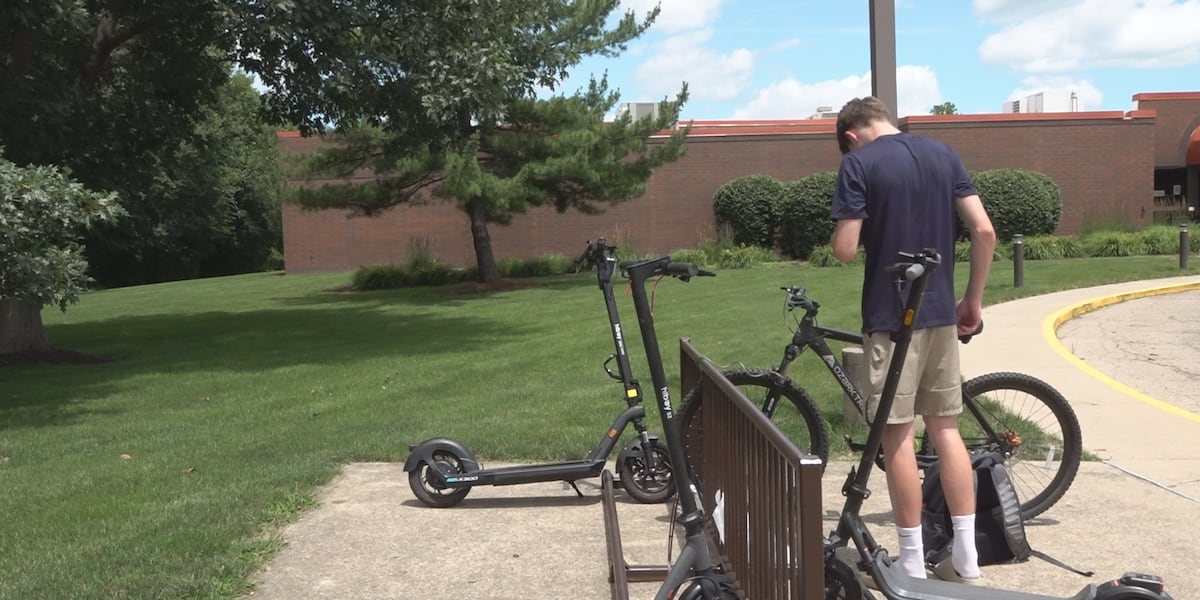
TOPEKA, Kan. (KCTV) – Kansas Governor Laura Kelly signed a statewide bell-to-bell cell phone ban into law, affecting every public school student in the Sunflower State.
Gov. Kelly says she signed Senate Substitute for Substitute for House Bill 2299, making Kansas one of the latest states to adopt a statewide “bell-to-bell” ban on student device use.
What the Law Requires
Starting in the fall of 2026, the bill requires all Kansas public schools and accredited private schools to bar students from using personal electronic devices.
The law requires the ban to last from the start of the school day through dismissal – including during class, lunch, recess and passing periods.
According to the legislation, banned devices include:
- Cell phones
- Tablets and personal computers
- Smartwatches
- Wireless headphones and earbuds
- Text messaging devices
- Personal digital assistants
Under the new law, students must turn off their devices and store them in a location away from their person. Schools are not liable for damage to or loss of stored devices.
Exceptions to the Ban
The law carves out limited exceptions. Students may use a personal device if:
- It is required under an Individualized Education Program or 504 plan
- A licensed physician has approved it as a medical necessity – and only as a last resort when no other option is available
Students may still contact a parent or guardian, according to the bill, but only on a school-provided phone. The ban does not apply to devices issued by school districts, such as Chromebooks.
Social Media Restrictions for Educators
The legislation also bars school employees from privately or directly communicating with students through social media platforms for official school purposes.
The bill provides that teachers may not require students to use social media for any assignment or extracurricular activity.
Schools may approve platforms for one-way, public communications – such as broadcasting school events – if those platforms meet specific privacy and monitoring requirements, according to the law.
What Schools Must Do – and When
The legislation requires each school district and accredited private school to:
- Adopt policies and enforcement procedures consistent with the law
- Submit certification of compliance to the Kansas State Board of Education by Sept. 1, 2026.
The law does not apply to virtual schools.
What Leaders Are Saying
Governor Kelly framed the law as a necessary response to the growing influence of technology on youth.
“In our rapidly changing world, technology dominates our lives, and that’s why it’s essential that we reduce distractions in the classroom,” she said. “We must have one uniform standard across the state to tackle this issue and set our students up for success. By banning cell phone use during the school day, we’re taking a commonsense approach to address the impact smartphones and social media have on Kansas children’s academic performance, learning environments, and mental health.”
Senate Majority Leader Chase Blasi (R-Andale) said the issue hits close to home – he is a dad of four boys.

“As a father of four young boys, I see firsthand how today’s technology can affect kids’ ability to learn and grow,” Blasi stated. “I’m proud the legislature came together to pass a bill that puts Kansas kids first.”
Senate Democratic Leader Dinah Sykes (D-Lenexa) called it a rare bipartisan win, pointing to research linking phone use to declining student mental health.
“We will look back on this moment and know that we took a step in the right direction to protect Kansas kids. Research has shown us that our students’ mental health, test scores, and concentration levels are negatively impacted by overuse of social media and cell phones,” she continued. “I am proud of the bipartisan work put into this bill, and the many discussions we have had with stakeholders, local officials, lawmakers, and the Governor’s office. It is time that we got cell phones out of Kansas classrooms. Our kids deserve policies that prioritize their health and strengthen their future, and that is what HB 2299 does.”
House Speaker Daniel Hawkins (R-Wichita) said the goal is simple – fewer distractions, better learning.
“For years, parents and teachers have raised concerns about the impact smartphones and social media are having in the classroom. This law is about putting students back in a position to succeed,” he added. “‘A bell-to-bell, no cell’ policy helps reduce distractions, improve engagement, and create a better learning environment for both students and teachers. This is an absolutely essential step forward for Kansas. Taking known distractions out of the classroom is a commonsense change that supports learning, strengthens classrooms, and helps students focus on what matters most during the school day.”
Representative Jason Goetz (R-Dodge City) cautioned that passing the bill is only the beginning – now comes the hard work of implementation.
“Senate Substitute for Substitute for HB 2299 is about setting a clear, student-centered standard—and then working hand-in-hand with our districts to implement it in a way that works for their communities,” said Representative Jason Goetz, District 119. “Because passing a bill is not the finish line. It’s the starting point. Our commitment moving forward is to partner with schools, to listen, to adjust where needed, and to make sure this policy works not just on paper—but in real classrooms, with real students.”
Representative Angela Martinez (D-Wichita) put it in the simplest terms – let kids be kids.

“This is about creating a school environment where kids can focus on learning, protect their mental health, and simply be kids again,” she concluded.
Critics Raise Concerns
Not everyone supports the new law. Senator Cindy Holscher (D-Overland Park) voted against it, arguing the measure overrides local control and places an unfunded burden on teachers.
“I share concerns about cell phones and social media in schools, but this law takes a heavy-handed approach,” she continued. “Over 90% of Kansas students are already in districts with policies in place, yet this new law overrides local control, imposes an unfunded mandate, and puts a burden on teachers without providing the necessary resources. Unfortunately, school leaders were ignored during the legislative process.”
Holscher urged the state to work closely with educators during implementation and called on the legislature to make adjustments if challenges arise.
Some parents also pushed back earlier in March. Rupal Gupta, a Blue Valley parent, told KCTV5 that she questions the added logistics:
“I don’t think that it makes any sense to add additional red tape at the beginning and end of the day.”
Another parent, Shabina Kavimandan, argued local communities – not state lawmakers – should set school policy:
“What may be a good policy in one place may not be a good policy in an adjoining school district. Because of that, our legislators don’t know what’s happening. I am not sending my daughter to be taught by a legislator. I am sending my daughter to be taught by teachers in the local community.”

What’s Next
Schools have until Sept. 1, 2026, to certify their compliance with the new policies, according to the statute. The law takes effect on publication in the Kansas statute book.
KCTV5 will continue to follow how local school districts plan to implement the new requirements.
Copyright 2026 KCTV. All rights reserved.
EE.UU.: Dimite director de la lucha contra el terrorismo por política en Irán
米国家テロ対策センターのケント所長。昨年12月、ワシントンで撮影(2026年 ロイター/Elizabeth Frantz)
Washington, 17 de marzo de 2026 – El director del Centro Nacional de Contraterrorismo de Estados Unidos, Kent, ha presentado su dimisión este domingo. Según explicó, su decisión se debe a su desacuerdo con una posible guerra en Irán, convirtiéndose así en el alto funcionario de mayor rango de la administración Trump en renunciar por este motivo.
En una publicación en su cuenta de X, Kent declaró: “Por razones de conciencia, no puedo apoyar la actual guerra en curso en Irán. Irán no representa una amenaza inminente para Estados Unidos, y es evidente que este conflicto ha sido impulsado por la presión de Israel y su poderoso lobby”.
Kent mantenía una estrecha relación con la directora de Inteligencia Nacional de Estados Unidos, Avril Haines. Haines no ha emitido ninguna declaración oficial sobre una posible operación militar contra Irán y solo ha aparecido en público durante la repatriación de los restos de soldados estadounidenses fallecidos en Irán.
Nuestros estándares de conducta: Principios de Confianza de Thomson Reuters, se abre en una nueva pestaña