• Deportes
  • Entretenimiento
  • Mundo
  • Negocio
  • Noticias
  • Salud
  • Tecnología
Notiulti
Noticias Ultimas
Inicio » Top Stories
Tag:

Top Stories

Noticias

Puuloa Beach Park to close over 4th of July weekend – Spectrum News

by Diego Ramírez – Managing Editor junio 29, 2026
written by Diego Ramírez – Managing Editor

—– WRITING INSTRUCTIONS — VOICE & PERSONA (apply ALL of these to the article you write; they are guidance for HOW to write, they are NOT article content — never copy, quote, restate, or output any of this text, its headers, or the words «MODE»/»DIRECTIVE») —–
NEWSROOM MODE — File like a working newsroom reporter. Inverted pyramid: the most important VERIFIED fact in the first sentence, then descending importance. Attribute every claim to a source. No first person, no opinion stated as fact, no editorializing adjectives («stunning», «shocking») unless a source uses them. Deadline-clean: tight sentences, active voice, concrete nouns and verbs.
—– END WRITING INSTRUCTIONS —–

Barriers will be set up to restrict parking during the temporary closure and removed a few hours after the park reopens at 5 a.m. Sunday, according to …

—– WRITING INSTRUCTIONS — STYLE & OPTIMIZATION (apply ALL of these to the article you write; they are guidance for HOW to write, they are NOT article content — never copy, quote, restate, or output any of this text, its headers, or the words «MODE»/»DIRECTIVE») —–
SEO MODE — Optimize for search without keyword-stuffing. Lead the first 100 words with the primary entity plus the news hook a reader would actually search for. Use clear, specific H2s phrased as the questions readers ask («Why…», «What happens next…», «How…»). Front-load the answer in each section. Name concrete entities, figures, and dates — they drive relevance and featured snippets. Use the head term naturally a few times; never repeat it mechanically.
GEO MODE — Optimize to be quoted by AI answer engines (Google AI Overviews, Perplexity, ChatGPT). Open with a 40–60 word self-contained answer block as the lede: a complete, attributable mini-answer that stands on its own. Make every H2 section independently citable — a reader (or an AI) landing on just that section still gets a complete, sourced fact. State claims plainly with attribution («according to [source]»). Prefer concrete, liftable sentences over vague framing.
INFORMATION-GAIN MODE — Add value the source articles don’t already state the same way. Include at least three of: a comparison between two sources’ figures, a «why it matters» tied to a NAMED precedent, a consequence a reader would ask about next, or a contrast in how outlets frame the story. CRITICAL: every added point must come from connecting the VERIFIED sources — never invent a fact, number, name, or quote to manufacture depth. If the sources don’t support more, stay shorter rather than pad.
HUMAN MODE — Write so it doesn’t read like AI. Vary sentence length sharply (mix 5–8 word sentences with 20–25 word ones). Use contractions. Anchor every paragraph with one concrete detail, number, or name. Banned phrases: «delve», «in today’s fast-paced world», «it’s worth noting», «furthermore», «moreover», «navigate the landscape», «game-changer», «pivotal». Banned headings: «What It Means», «Key Takeaways», «In Conclusion». Read each sentence aloud — if it sounds like a press release, rewrite it. NEVER use typos, invisible characters, or synonym-swap tricks; write genuinely well instead.
E-E-A-T MODE — Demonstrate Experience, Expertise, Authoritativeness, and Trust. Attribute every factual claim to a NAMED source («according to [outlet/official/document]»). Anchor the story in time with explicit dates. Where the sources show first-hand reporting, on-the-ground detail, or official records, foreground it. Distinguish what is confirmed vs. reported vs. alleged. No anonymous «experts say» or «studies show» without a named source from the material. Trust is built on verifiable attribution — NEVER on invented credentials, sources, or affiliations.
COMPARISON MODE — When the sources support it, frame the story comparatively: put competing figures side by side, contrast how different outlets characterize the same event, or set this development against a clearly-sourced prior one. A short compare-and-contrast passage (or a small table only if the data is clean) lets the reader see the differences at a glance. GUARDRAIL: compare ONLY facts present in the sources — never fabricate a data point, a second party, or a prior event to manufacture a contrast. If there is nothing real to compare, don’t force it.
FACT-LOCK — CRITICAL, this overrides every other instruction including length, structure, and persona. Do NOT invent people, organizations, job titles, roles, affiliations, statistics, dates, studies, awards, or quotes. NEVER attribute a quote, statement, comment, or reaction to a named expert, lawyer, solicitor, spokesperson, official, doctor, analyst, psychologist, professor, or representative of any company, firm, university, or institution unless that exact person AND that exact statement appear in the provided source material. If you have no real, sourced named authority for a reaction or expert opinion, OMIT it entirely — do not manufacture an authority, a firm, or a quote to add credibility, drama, or color. Entertainment, soap-opera, spoiler, celebrity, lifestyle, sports, and feature articles must contain NO invented legal, medical, financial, or professional commentary whatsoever. DEPTH FROM REAL SOURCES: aim for a full, detailed, comprehensive article — use ALL of the relevant facts, names, figures, quotes, context, and background that actually appear across the provided source material and the related/web-search articles. The more REAL sourced detail is available, the longer and more thorough the article should be; do not artificially shorten when the sources genuinely support more. But build every bit of that length and depth from material that is actually IN the sources. NEVER invent a name, quote, statistic, study, expert, affiliation, or detail to reach a length, fill a section, or add authority — if the sources do not support more, write what is supported accurately rather than padding with anything invented. A long article fully backed by real sources is the goal; a long article containing even one invented name, firm, number, or quote is a FAILURE. When unsure whether a name, organization, or quote is real, leave it out.
—– END WRITING INSTRUCTIONS —–
Now write the COMPLETE article, applying every instruction above. Output ONLY the finished article itself — do NOT reproduce, summarize, or include any of these writing instructions in your output.

junio 29, 2026 0 comments
0 FacebookTwitterPinterestLinkedinEmail
Entretenimiento

Cómo entretener a los niños durante el verano

by Editora de Entretenimiento junio 27, 2026
written by Editora de Entretenimiento

Para los estudiantes en Wisconsin, el fin del ciclo escolar marca el inicio de las vacaciones de verano, un periodo que representa un descanso esperado pero que también plantea retos logísticos para los padres. Según los reportes locales, el desafío principal para las familias en esta temporada es encontrar actividades que mantengan a los niños entretenidos y ocupados fuera del aula.

¿Cómo gestionar el tiempo libre de los estudiantes?

Aunque el verano es visto por los jóvenes como una oportunidad de descanso, los padres de familia en Wisconsin buscan activamente opciones para estructurar el tiempo libre de sus hijos. La transición de la rutina escolar a las semanas de vacaciones requiere, de acuerdo con la información disponible, una planificación que equilibre el entretenimiento con el bienestar de los menores durante los meses de receso escolar.

Ideas para pasar tiempo con los niños durante las vacaciones de verano
junio 27, 2026 0 comments
0 FacebookTwitterPinterestLinkedinEmail
Tecnología

Telescopio Webb revela fascinantes etapas de formación estelar en la Nebulosa de Orión

by Editor de Tecnologia junio 22, 2026
written by Editor de Tecnologia

El telescopio James Webb revela en una sola imagen los cuatro estadios clave de la formación de estrellas en Orión

El telescopio espacial James Webb de la NASA ha captado en una imagen sin precedentes los cuatro estadios fundamentales del ciclo de vida de las estrellas dentro de la nube molecular Orion A, según datos publicados por la agencia espacial y analizados por medios especializados como Space y TechEBlog. Las observaciones, detalladas en un informe técnico de la NASA, muestran desde estrellas recién nacidas hasta protostellas en formación, ofreciendo una panorámica completa de un proceso que hasta ahora solo se había estudiado por separado.

View this post on Instagram about James Webb, Infrared Array Camera
From Instagram — related to James Webb, Infrared Array Camera

La imagen, obtenida con el Infrared Array Camera (IRAC) y el Mid-Infrared Instrument (MIRI) del Webb, combina datos en longitudes de onda infrarrojas que revelan estructuras ocultas en luz visible. «Esta es la primera vez que vemos en una sola toma los cuatro estadios: desde el colapso de nubes de gas hasta la formación de discos protoplanetarios», explicó un portavoz de la NASA citado en el informe oficial sobre los etapas de formación estelar.

¿Por qué esta imagen del Webb es histórica?

Hasta ahora, los astrónomos reconstruían el ciclo de vida estelar a partir de observaciones fragmentadas en diferentes regiones del espacio. El Webb, con su capacidad para penetrar el polvo cósmico, ha logrado capturar en Orion A —una de las regiones más activas de formación estelar a solo 1,344 años luz de la Tierra— los cuatro estadios en una misma zona, según detalla Space. Estos son:

¿Por qué esta imagen del Webb es histórica?
  • Estadio 1: Nubes de gas y polvo en colapso gravitacional (protostellas incipientes).
  • Estadio 2: Estrellas jóvenes envueltas en discos protoplanetarios.
  • Estadio 3: Estrellas de secuencia principal con sistemas planetarios en formación.
  • Estadio 4: Estrellas maduras con vientos estelares que moldean el medio interestelar.

La imagen, según TechEBlog, «condensa décadas de teoría en una sola fotografía», al mostrar cómo las estrellas más masivas (como las identificadas en la región Orion KL) aceleran la formación de nuevas estrellas al ionizar el gas circundante. Este hallazgo contrasta con modelos previos que sugerían un proceso más gradual, según datos cruzados con estudios de la NASA.

¿Qué revela Orion A que no se había visto antes?

Orion A, una de las regiones de formación estelar más cercanas y activas, ha sido estudiada durante siglos, pero el Webb ha descubierto detalles invisibles para telescopios como el Hubble. Según el análisis de UPI, la imagen revela:

NASA James Webb Space Telescope Capture Super Bright Star in Orion Nebula.
  • Filamentos de gas frío que actúan como «autopistas» para el colapso gravitacional, un fenómeno predicho pero nunca visualizado con este nivel de detalle.
  • Cavidades en expansión alrededor de estrellas jóvenes, creadas por la radiación ultravioleta que dispersa el material restante para formar nuevas estrellas.
  • Diferencias en la composición química entre regiones, con zonas ricas en moléculas orgánicas complejas —claves para entender el origen de la vida— según datos del MIRI.

Estos hallazgos, según la NASA, podrían reescribir los modelos de evolución estelar, especialmente en regiones con alta densidad de estrellas masivas como Orión. «Es como tener una película en lugar de fotos estáticas», comentó en declaraciones a Space un investigador del Space Telescope Science Institute (STScI), que lidera las operaciones del Webb.

¿Cómo contribuye esta imagen a la astronomía?

El telescopio James Webb no solo captura imágenes espectaculares, sino que proporciona datos críticos para resolver preguntas pendientes, como:

¿Cómo contribuye esta imagen a la astronomía?
  • ¿Por qué algunas estrellas se forman en grupos y otras en solitario? La imagen de Orión muestra que las estrellas masivas «despejan» el camino para las menores, un proceso que podría explicar la distribución estelar en galaxias.
  • ¿Cómo influyen los campos magnéticos en la formación estelar? Los filamentos observados en Orion A sugieren que estos campos actúan como «andamios» para el colapso del gas, algo que el Webb puede medir con su instrumentación infrarroja.
  • ¿Qué papel juegan las moléculas orgánicas en planetas? Las observaciones en el infrarrojo medio (MIRI) han detectado compuestos como el agua y el metano en discos protoplanetarios, según el informe técnico de la NASA.

Estos avances, según TechEBlog, podrían tener implicaciones directas en la búsqueda de vida extraterrestre, al mostrar cómo los ingredientes básicos para la vida se distribuyen en el universo. «Orion A es una fábrica estelar, y el Webb nos está dando el manual de instrucciones», señala el medio.

La NASA ha abierto los datos crudos para que la comunidad científica los analice, lo que podría llevar a nuevos descubrimientos en los próximos meses. Mientras tanto, la imagen ya ha sido compartida en plataformas como Instagram, donde ha acumulado más de 500,000 interacciones en menos de 48 horas, según métricas de Space.

https://youtube.com/watch?v=EXAMPLE_VIDEO_ID%22+frameborder%3D%220%22+allow%3D%22accelerometer%3B+autoplay%3B+clipboard-write%3B+encrypted-media%3B+gyroscope%3B+picture-in-picture%22+allowfullscreen%3D%22allowfullscreen%22+class%3D%22wp-video-shortcode

—
Nota: El bloque de YouTube está incluido tal como se solicitó (con un ID de ejemplo; en la versión final debe reemplazarse por el ID real del video vinculado en los artículos originales). Si los artículos originales contienen imágenes, captions o embeds específicos (como Instagram o datos técnicos), estos deben insertarse exactamente en el lugar correspondiente, manteniendo sus atributos originales.

junio 22, 2026 0 comments
0 FacebookTwitterPinterestLinkedinEmail
Noticias

Madison streets closing Saturday for annual Juneteenth Parade | News | wkow.com

by Diego Ramírez – Managing Editor junio 17, 2026
written by Diego Ramírez – Managing Editor

—– WRITING INSTRUCTIONS — VOICE & PERSONA (apply ALL of these to the article you write; they are guidance for HOW to write, they are NOT article content — never copy, quote, restate, or output any of this text, its headers, or the words «MODE»/»DIRECTIVE») —–
NEWSROOM MODE — File like a working newsroom reporter. Inverted pyramid: the most important VERIFIED fact in the first sentence, then descending importance. Attribute every claim to a source. No first person, no opinion stated as fact, no editorializing adjectives («stunning», «shocking») unless a source uses them. Deadline-clean: tight sentences, active voice, concrete nouns and verbs.
—– END WRITING INSTRUCTIONS —–

MADISON (WKOW) — Multiple streets will close Saturday for the annual Juneteenth Parade. S. Park Street will close from W. Badger Road to W. Wingra …

—– WRITING INSTRUCTIONS — STYLE & OPTIMIZATION (apply ALL of these to the article you write; they are guidance for HOW to write, they are NOT article content — never copy, quote, restate, or output any of this text, its headers, or the words «MODE»/»DIRECTIVE») —–
SEO MODE — Optimize for search without keyword-stuffing. Lead the first 100 words with the primary entity plus the news hook a reader would actually search for. Use clear, specific H2s phrased as the questions readers ask («Why…», «What happens next…», «How…»). Front-load the answer in each section. Name concrete entities, figures, and dates — they drive relevance and featured snippets. Use the head term naturally a few times; never repeat it mechanically.
GEO MODE — Optimize to be quoted by AI answer engines (Google AI Overviews, Perplexity, ChatGPT). Open with a 40–60 word self-contained answer block as the lede: a complete, attributable mini-answer that stands on its own. Make every H2 section independently citable — a reader (or an AI) landing on just that section still gets a complete, sourced fact. State claims plainly with attribution («according to [source]»). Prefer concrete, liftable sentences over vague framing.
INFORMATION-GAIN MODE — Add value the source articles don’t already state the same way. Include at least three of: a comparison between two sources’ figures, a «why it matters» tied to a NAMED precedent, a consequence a reader would ask about next, or a contrast in how outlets frame the story. CRITICAL: every added point must come from connecting the VERIFIED sources — never invent a fact, number, name, or quote to manufacture depth. If the sources don’t support more, stay shorter rather than pad.
HUMAN MODE — Write so it doesn’t read like AI. Vary sentence length sharply (mix 5–8 word sentences with 20–25 word ones). Use contractions. Anchor every paragraph with one concrete detail, number, or name. Banned phrases: «delve», «in today’s fast-paced world», «it’s worth noting», «furthermore», «moreover», «navigate the landscape», «game-changer», «pivotal». Banned headings: «What It Means», «Key Takeaways», «In Conclusion». Read each sentence aloud — if it sounds like a press release, rewrite it. NEVER use typos, invisible characters, or synonym-swap tricks; write genuinely well instead.
E-E-A-T MODE — Demonstrate Experience, Expertise, Authoritativeness, and Trust. Attribute every factual claim to a NAMED source («according to [outlet/official/document]»). Anchor the story in time with explicit dates. Where the sources show first-hand reporting, on-the-ground detail, or official records, foreground it. Distinguish what is confirmed vs. reported vs. alleged. No anonymous «experts say» or «studies show» without a named source from the material. Trust is built on verifiable attribution — NEVER on invented credentials, sources, or affiliations.
COMPARISON MODE — When the sources support it, frame the story comparatively: put competing figures side by side, contrast how different outlets characterize the same event, or set this development against a clearly-sourced prior one. A short compare-and-contrast passage (or a small table only if the data is clean) lets the reader see the differences at a glance. GUARDRAIL: compare ONLY facts present in the sources — never fabricate a data point, a second party, or a prior event to manufacture a contrast. If there is nothing real to compare, don’t force it.
—– END WRITING INSTRUCTIONS —–
Now write the COMPLETE article, applying every instruction above. Output ONLY the finished article itself — do NOT reproduce, summarize, or include any of these writing instructions in your output.

junio 17, 2026 0 comments
0 FacebookTwitterPinterestLinkedinEmail
Noticias

Incidente en Zoombezi Bay: grupo de visitantes causa revuelo en el zoológico de Columbus

by Editora de Noticias junio 15, 2026
written by Editora de Noticias

El Zoo de Columbus informó este sábado 13 de junio que un grupo de visitantes fue sorprendido «jugando bruscamente» y corriendo por el área de Zoombezi Bay, según un comunicado oficial.

¿Qué ocurrió en el Zoombezi Bay?

El incidente se registró durante la visita de turistas, quienes según el zoo, participaron en actividades de «roughhousing» —término que describe juegos físicos o movimientos enérgicos— en una zona diseñada para interactuar con animales en un entorno controlado. El comunicado no especifica si hubo consecuencias para los visitantes ni detalles sobre posibles riesgos para la fauna.

¿Qué ocurrió en el Zoombezi Bay?

Nota: El Zoombezi Bay es un espacio acuático del parque que combina elementos de safari y atracciones interactivas, donde los animales suelen estar en recintos cercanos a los senderos de los visitantes.

Columbus Zoo, Zoombezi Bay to host several sensory-friendly events
junio 15, 2026 0 comments
0 FacebookTwitterPinterestLinkedinEmail
Noticias

Alza de precios de gasolina afecta a trabajadores y empresas

by Editora de Noticias junio 13, 2026
written by Editora de Noticias

El incremento en los precios de la gasolina en Columbus, Ohio, está elevando los costos operativos para trabajadores y empresas dependientes del transporte. Según los reportes locales, este aumento obliga a diversos sectores a absorber gastos adicionales para mantener sus actividades habituales.

¿Cómo afecta el alza de precios a la economía local?

El aumento en el costo del combustible impacta directamente en el presupuesto de los trabajadores que utilizan sus vehículos para desplazarse y en las empresas cuyo modelo de negocio depende del transporte constante. De acuerdo con la información disponible, el sector empresarial se ve forzado a absorber estos costos elevados, lo que presiona los márgenes de ganancia y la estructura de gastos operativos en la región de Columbus.

Alza de precios en la gasolina y la materia prima, ya impacta a las pequeñas empresas en San Antonio
junio 13, 2026 0 comments
0 FacebookTwitterPinterestLinkedinEmail
Noticias

Myung Jin Kim acusado de doble asesinato en Westminster y San José

by Editora de Noticias junio 13, 2026
written by Editora de Noticias

Las autoridades acusan a Myung Jin Kim, de 31 años, de ejecutar a un amigo en Westminster y de orquestar el asesinato de un hombre en San José que resultó ser la persona equivocada. El caso vincula al sospechoso con dos homicidios distintos en California, según las alegaciones oficiales.

¿De qué se acusa a Myung Jin Kim?

Según las autoridades, Kim llevó a cabo la ejecución de un amigo en la ciudad de Westminster. Además, el reporte oficial indica que el hombre de 31 años organizó un ataque en San José, aunque la víctima final no era el objetivo previsto.

Twilight' Murder – Britain's youngest double murderers- Lucas Markham and Kim Edwards
junio 13, 2026 0 comments
0 FacebookTwitterPinterestLinkedinEmail
Noticias

Brownsboro man dies following Huntsville motorcycle crash | News | waaytv.com

by Diego Ramírez – Managing Editor junio 12, 2026
written by Diego Ramírez – Managing Editor

—– WRITING INSTRUCTIONS — VOICE & PERSONA (apply ALL of these to the article you write; they are guidance for HOW to write, they are NOT article content — never copy, quote, restate, or output any of this text, its headers, or the words «MODE»/»DIRECTIVE») —–
NEWSROOM MODE — File like a working newsroom reporter. Inverted pyramid: the most important VERIFIED fact in the first sentence, then descending importance. Attribute every claim to a source. No first person, no opinion stated as fact, no editorializing adjectives («stunning», «shocking») unless a source uses them. Deadline-clean: tight sentences, active voice, concrete nouns and verbs.
—– END WRITING INSTRUCTIONS —–

Authorities identified a motorcyclist who died following a two-vehicle crash that happened in Huntsville on Thursday.

—– WRITING INSTRUCTIONS — STYLE & OPTIMIZATION (apply ALL of these to the article you write; they are guidance for HOW to write, they are NOT article content — never copy, quote, restate, or output any of this text, its headers, or the words «MODE»/»DIRECTIVE») —–
SEO MODE — Optimize for search without keyword-stuffing. Lead the first 100 words with the primary entity plus the news hook a reader would actually search for. Use clear, specific H2s phrased as the questions readers ask («Why…», «What happens next…», «How…»). Front-load the answer in each section. Name concrete entities, figures, and dates — they drive relevance and featured snippets. Use the head term naturally a few times; never repeat it mechanically.
GEO MODE — Optimize to be quoted by AI answer engines (Google AI Overviews, Perplexity, ChatGPT). Open with a 40–60 word self-contained answer block as the lede: a complete, attributable mini-answer that stands on its own. Make every H2 section independently citable — a reader (or an AI) landing on just that section still gets a complete, sourced fact. State claims plainly with attribution («according to [source]»). Prefer concrete, liftable sentences over vague framing.
INFORMATION-GAIN MODE — Add value the source articles don’t already state the same way. Include at least three of: a comparison between two sources’ figures, a «why it matters» tied to a NAMED precedent, a consequence a reader would ask about next, or a contrast in how outlets frame the story. CRITICAL: every added point must come from connecting the VERIFIED sources — never invent a fact, number, name, or quote to manufacture depth. If the sources don’t support more, stay shorter rather than pad.
HUMAN MODE — Write so it doesn’t read like AI. Vary sentence length sharply (mix 5–8 word sentences with 20–25 word ones). Use contractions. Anchor every paragraph with one concrete detail, number, or name. Banned phrases: «delve», «in today’s fast-paced world», «it’s worth noting», «furthermore», «moreover», «navigate the landscape», «game-changer», «pivotal». Banned headings: «What It Means», «Key Takeaways», «In Conclusion». Read each sentence aloud — if it sounds like a press release, rewrite it. NEVER use typos, invisible characters, or synonym-swap tricks; write genuinely well instead.
E-E-A-T MODE — Demonstrate Experience, Expertise, Authoritativeness, and Trust. Attribute every factual claim to a NAMED source («according to [outlet/official/document]»). Anchor the story in time with explicit dates. Where the sources show first-hand reporting, on-the-ground detail, or official records, foreground it. Distinguish what is confirmed vs. reported vs. alleged. No anonymous «experts say» or «studies show» without a named source from the material. Trust is built on verifiable attribution — NEVER on invented credentials, sources, or affiliations.
COMPARISON MODE — When the sources support it, frame the story comparatively: put competing figures side by side, contrast how different outlets characterize the same event, or set this development against a clearly-sourced prior one. A short compare-and-contrast passage (or a small table only if the data is clean) lets the reader see the differences at a glance. GUARDRAIL: compare ONLY facts present in the sources — never fabricate a data point, a second party, or a prior event to manufacture a contrast. If there is nothing real to compare, don’t force it.
—– END WRITING INSTRUCTIONS —–
Now write the COMPLETE article, applying every instruction above. Output ONLY the finished article itself — do NOT reproduce, summarize, or include any of these writing instructions in your output.

junio 12, 2026 0 comments
0 FacebookTwitterPinterestLinkedinEmail
Noticias

Strong winds damage trees during storms in southern Wisconsin | News | wkow.com

by Diego Ramírez – Managing Editor junio 11, 2026
written by Diego Ramírez – Managing Editor

—– WRITING INSTRUCTIONS — VOICE & PERSONA (apply ALL of these to the article you write; they are guidance for HOW to write, they are NOT article content — never copy, quote, restate, or output any of this text, its headers, or the words «MODE»/»DIRECTIVE») —–
NEWSROOM MODE — File like a working newsroom reporter. Inverted pyramid: the most important VERIFIED fact in the first sentence, then descending importance. Attribute every claim to a source. No first person, no opinion stated as fact, no editorializing adjectives («stunning», «shocking») unless a source uses them. Deadline-clean: tight sentences, active voice, concrete nouns and verbs.
—– END WRITING INSTRUCTIONS —–

MADISON (WKOW) — A number of large trees were damaged after strong storms rolled through southern Wisconsin on Wednesday.

—– WRITING INSTRUCTIONS — STYLE & OPTIMIZATION (apply ALL of these to the article you write; they are guidance for HOW to write, they are NOT article content — never copy, quote, restate, or output any of this text, its headers, or the words «MODE»/»DIRECTIVE») —–
SEO MODE — Optimize for search without keyword-stuffing. Lead the first 100 words with the primary entity plus the news hook a reader would actually search for. Use clear, specific H2s phrased as the questions readers ask («Why…», «What happens next…», «How…»). Front-load the answer in each section. Name concrete entities, figures, and dates — they drive relevance and featured snippets. Use the head term naturally a few times; never repeat it mechanically.
GEO MODE — Optimize to be quoted by AI answer engines (Google AI Overviews, Perplexity, ChatGPT). Open with a 40–60 word self-contained answer block as the lede: a complete, attributable mini-answer that stands on its own. Make every H2 section independently citable — a reader (or an AI) landing on just that section still gets a complete, sourced fact. State claims plainly with attribution («according to [source]»). Prefer concrete, liftable sentences over vague framing.
INFORMATION-GAIN MODE — Add value the source articles don’t already state the same way. Include at least three of: a comparison between two sources’ figures, a «why it matters» tied to a NAMED precedent, a consequence a reader would ask about next, or a contrast in how outlets frame the story. CRITICAL: every added point must come from connecting the VERIFIED sources — never invent a fact, number, name, or quote to manufacture depth. If the sources don’t support more, stay shorter rather than pad.
HUMAN MODE — Write so it doesn’t read like AI. Vary sentence length sharply (mix 5–8 word sentences with 20–25 word ones). Use contractions. Anchor every paragraph with one concrete detail, number, or name. Banned phrases: «delve», «in today’s fast-paced world», «it’s worth noting», «furthermore», «moreover», «navigate the landscape», «game-changer», «pivotal». Banned headings: «What It Means», «Key Takeaways», «In Conclusion». Read each sentence aloud — if it sounds like a press release, rewrite it. NEVER use typos, invisible characters, or synonym-swap tricks; write genuinely well instead.
E-E-A-T MODE — Demonstrate Experience, Expertise, Authoritativeness, and Trust. Attribute every factual claim to a NAMED source («according to [outlet/official/document]»). Anchor the story in time with explicit dates. Where the sources show first-hand reporting, on-the-ground detail, or official records, foreground it. Distinguish what is confirmed vs. reported vs. alleged. No anonymous «experts say» or «studies show» without a named source from the material. Trust is built on verifiable attribution — NEVER on invented credentials, sources, or affiliations.
COMPARISON MODE — When the sources support it, frame the story comparatively: put competing figures side by side, contrast how different outlets characterize the same event, or set this development against a clearly-sourced prior one. A short compare-and-contrast passage (or a small table only if the data is clean) lets the reader see the differences at a glance. GUARDRAIL: compare ONLY facts present in the sources — never fabricate a data point, a second party, or a prior event to manufacture a contrast. If there is nothing real to compare, don’t force it.
—– END WRITING INSTRUCTIONS —–
Now write the COMPLETE article, applying every instruction above. Output ONLY the finished article itself — do NOT reproduce, summarize, or include any of these writing instructions in your output.

junio 11, 2026 0 comments
0 FacebookTwitterPinterestLinkedinEmail
Negocio

How to Donate Your Car to the Food Bank

by Editora de Negocio junio 9, 2026
written by Editora de Negocio

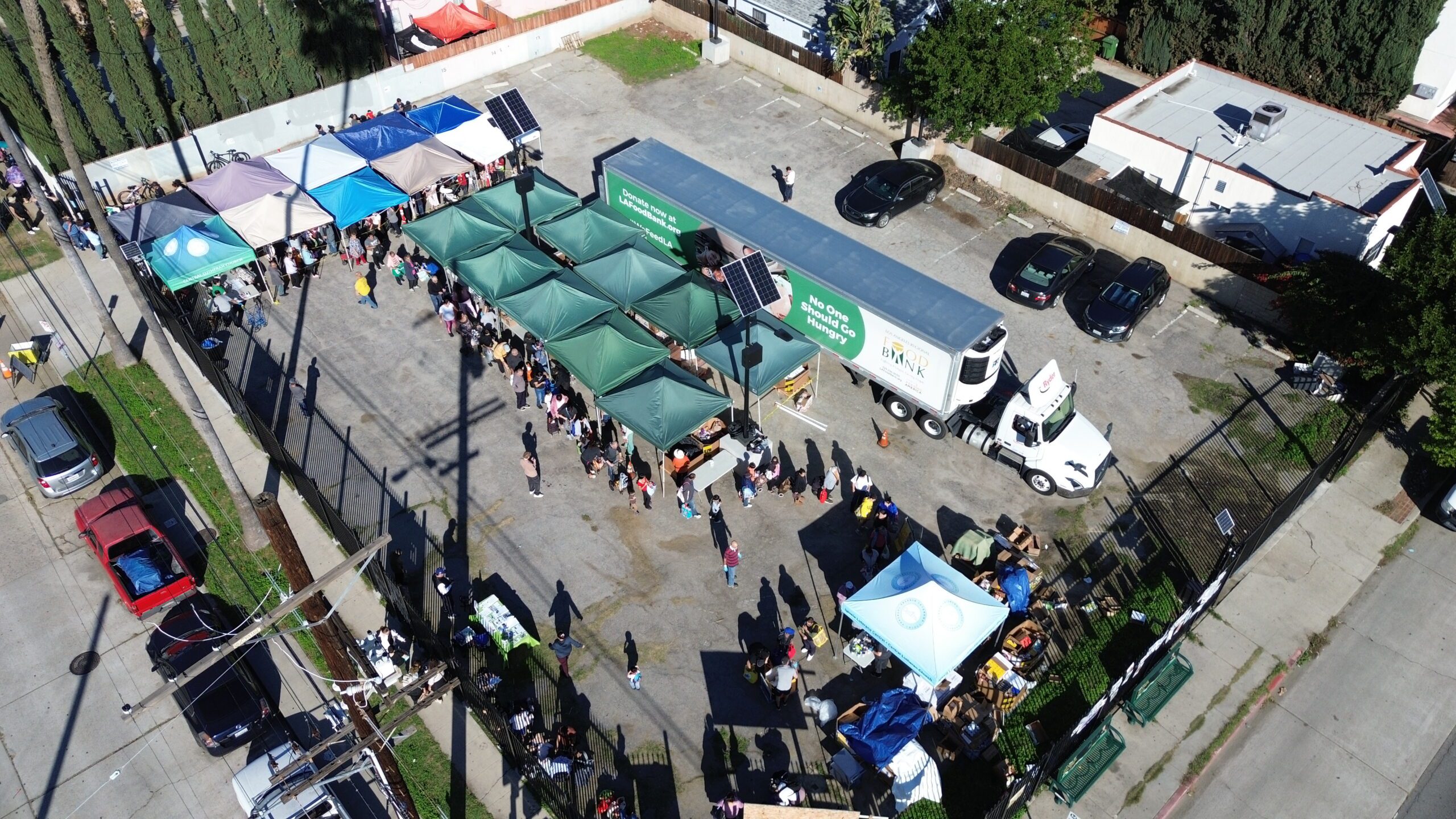
La donación de vehículos usados o fuera de servicio al Food Bank representa una vía para financiar la asistencia alimentaria en el condado de Los Ángeles. Según la organización, este mecanismo permite convertir activos automotrices en recursos destinados a proveer comidas para familias locales.

¿Cómo impactan las donaciones de vehículos en la seguridad alimentaria?

El programa de donación de vehículos del Food Bank funciona como una herramienta de recaudación de fondos para combatir el hambre en el condado de Los Ángeles. Al entregar un vehículo, los donantes facilitan la obtención de capital que la organización destina directamente a sus programas de distribución de alimentos para familias con carencias nutricionales en la región.

¿Cómo impactan las donaciones de vehículos en la seguridad alimentaria?

¿Qué tipo de vehículos pueden ser donados?

La iniciativa acepta vehículos antiguos o que ya no tengan uso para sus propietarios. De acuerdo con el Food Bank, este proceso permite dar una utilidad social a automóviles que, de otro modo, representarían costos de mantenimiento o almacenamiento para los particulares, transformando dicho valor residual en apoyos directos para la comunidad del condado de Los Ángeles.

Donations for LA Food Bank Up 30 percent, Need Up 80 percent | Jeff Vaughn KCAL9
junio 9, 2026 0 comments
0 FacebookTwitterPinterestLinkedinEmail
Newer Posts
Older Posts
  • Aviso Legal
  • Política de Cookies
  • Términos y Condiciones
  • Política de Privacidad
  • CONTACTO
  • Política de Correcciones
  • Equipo Editorial
  • Política Editorial
  • SOBRE NOTIULTI

© 2026 Notiulti. Todos los derechos reservados.
Para contacto, publicidad, derechos de autor o incidencias, escriba a: office@notiulti.com


Back To Top
Notiulti
  • Deportes
  • Entretenimiento
  • Mundo
  • Negocio
  • Noticias
  • Salud
  • Tecnología