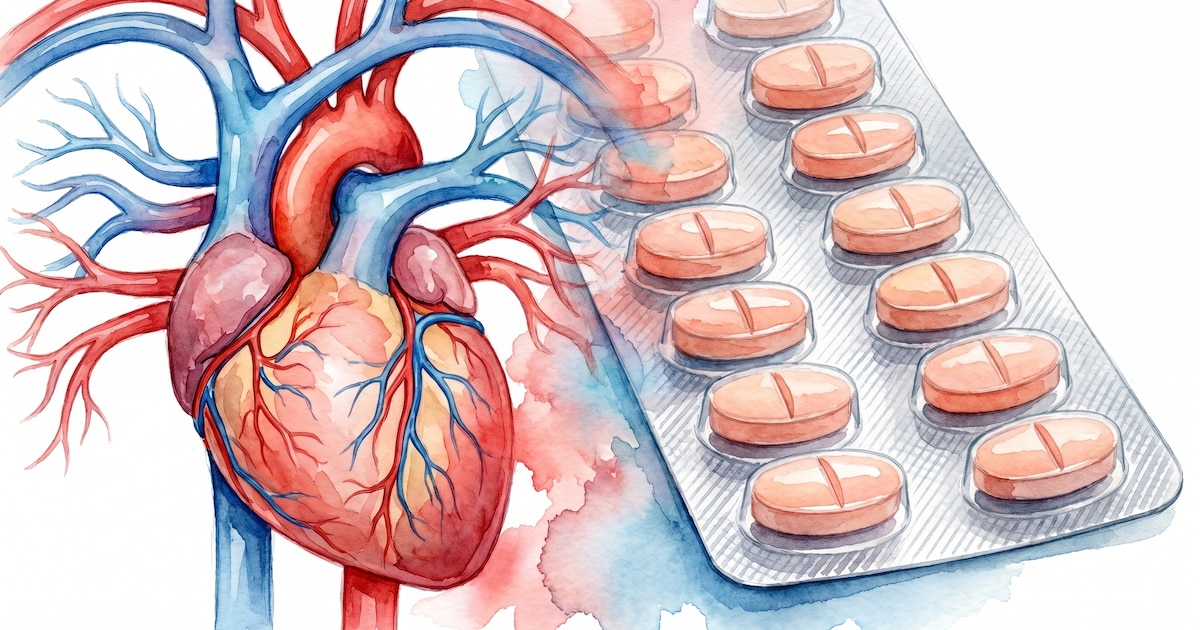
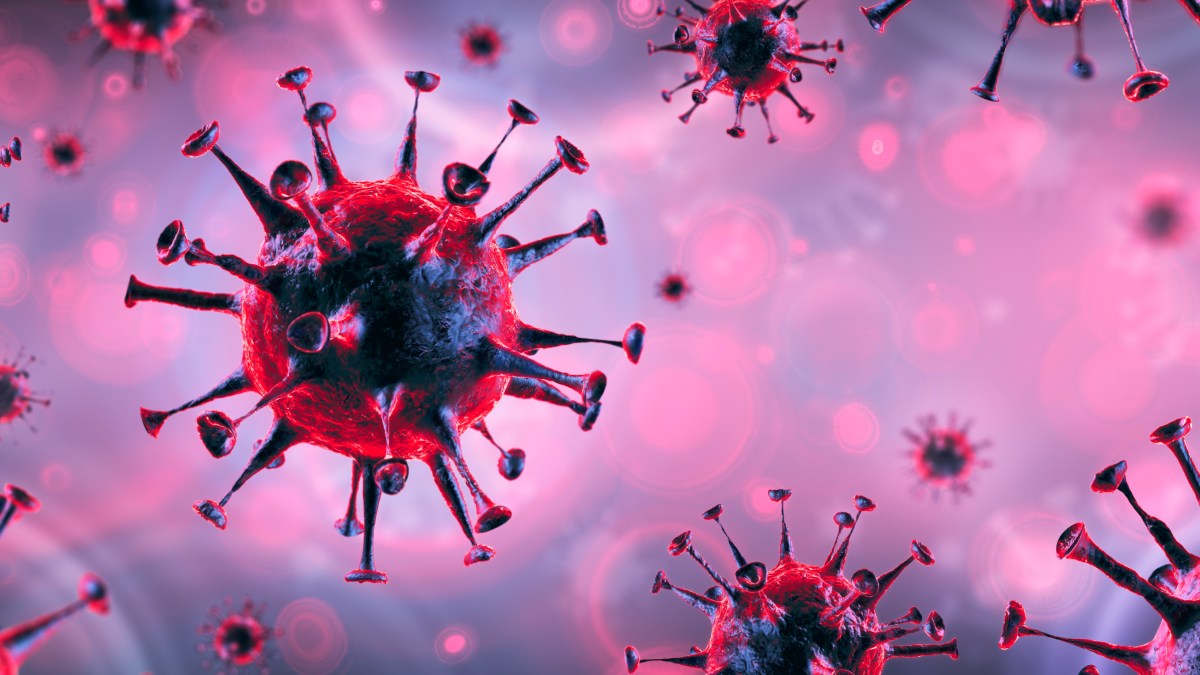
El resfrío es una infección aguda del tracto respiratorio superior causada por virus, principalmente el rinovirus. Se contagia por el contacto con …
Salud
- Alicorp presentó solicitud a la SIC para adquirir marcas del fabricante de margarina Rama LaRepublica.co
- Peruana Alicorp va por la margarina Rama laopinion.co
- Margarina Rama tendrá un importante cambio en Colombia: hubo solicitud clave ante la SIC Pulzo
- SIC evalúa compra por parte de Alicorp para quedarse con Flora Food, fabricante de margarina Rama | El Colombiano El Colombiano
12 señales poco conocidas de falta de hierro que tu cuerpo envía y casi nadie detecta a tiempo
La deficiencia de hierro es un problema de salud común que afecta a muchas personas, especialmente a las mujeres. Durante el embarazo, el cuerpo necesita más hierro para producir sangre adicional que apoye el crecimiento del bebé. Si no se obtiene suficiente hierro a través de la dieta o suplementos, puede desarrollarse anemia por deficiencia de hierro, lo que aumenta el riesgo de parto prematuro, bajo peso al nacer y pérdida excesiva de sangre durante el parto.
Los síntomas de falta de hierro pueden ser sutiles y pasar desapercibidos. Algunas señales poco conocidas incluyen fatiga persistente, piel pálida, uñas quebradizas, pérdida de cabello, lengua inflamada o dolorosa, antojos de sustancias no nutritivas como hielo o tierra (pica), dificultad para concentrarse y mareos frecuentes. Estos síntomas pueden aparecer incluso antes de que se diagnostique anemia.
La anemia en el embarazo es prevenible y tratable. Los médicos suelen recomendar análisis de sangre en diferentes etapas del embarazo para detectar la condición a tiempo. Además de las vitaminas prenatales, puede ser necesario tomar suplementos de hierro bajo supervisión médica. Tratar la anemia no solo mejora la salud de la madre, sino que también reduce los riesgos para el bebé, como retrasos en el desarrollo y anemia neonatal.
Es importante prestar atención a las señales que el cuerpo envía y consultar a un profesional de la salud si se experimentan síntomas persistentes. Un diagnóstico temprano y un tratamiento adecuado pueden prevenir complicaciones graves durante el embarazo y el parto.
Un estudio reciente revela que la malaria jugó un papel clave en la forma en que los primeros humanos se expandieron por el continente africano. Según la investigación, la presencia de la enfermedad influyó en los patrones de migración y asentamiento de las poblaciones antiguas, ya que evitaban áreas con alta transmisión de malaria o se adaptaron a ellas a lo largo de miles de años.
Los científicos analizaron datos genéticos y arqueológicos para entender cómo la presión selectiva de la malaria pudo haber moldeado la distribución humana en África durante la prehistoria. Los hallazgos sugieren que variantes genéticas relacionadas con la resistencia a la malaria, como la célula falciforme, se volvieron más comunes en regiones donde la enfermedad era endémica, lo que a su vez afectó dónde podían vivir y prosperar las comunidades humanas.
Este enfoque interdisciplinario combina evidencia de la evolución humana, la genética de poblaciones y la ecología de la enfermedad para ofrecer una nueva perspectiva sobre cómo factores biológicos como la malaria no solo afectaron la salud, sino también los movimientos y la supervivencia de nuestros ancestros en el continente.
Rehabilitación deportiva moderna: hielo y antiinflamatorios ya no son la primera opción
Los expertos en rehabilitación deportiva están cuestionando los protocolos tradicionales para tratar lesiones, como el uso de hielo, antiinflamatorios y el reposo absoluto, que durante mucho tiempo se consideraron esenciales.
Según el nutricionista español especializado en deporte Saúl Sánchez, el protocolo clásico RICE (reposo, hielo, compresión y elevación) está quedando obsoleto porque interrumpe el proceso inflamatorio fisiológico, lo que puede afectar la calidad del tejido regenerado y aumentar el riesgo de recaída.
“Ni antiinflamatorios, ni hielo, ni reposo absoluto. Son tres cosas que no debes hacer después de una lesión”, resume el especialista, destacando que la evidencia científica internacional respalda un cambio hacia enfoques que priorizan el movimiento dosificado y supervisado.
Este nuevo enfoque permite una mayor adaptación del tejido y reduce las probabilidades de volver a lesionarse, alineándose con los avances en entrenamiento, nutrición y medicina deportiva.
La recuperación moderna se centra en la activación gradual, la personalización del tratamiento y el respeto por los procesos biológicos naturales del cuerpo, dejando atrás métodos que ya no son la primera opción según las últimas investigaciones.
Un total de 500 vacunas antigripales llegaron el viernes a la ciudad, según confirmaron desde PAMI a La Brújula 24. Estas dosis se suman a las 300 que habían arribado hace aproximadamente 15 días, lo que permite avanzar con la aplicación en los grupos priorizados. Se informó que durante esta semana se espera la llegada de más dosis para continuar con la campaña de inmunización.
Varios cardiólogos explican la relación entre la salud del corazón y la buena higiene dental, destacando que cepillarse los dientes, usar hilo dental y hacerse chequeos dentales regulares no solo contribuyen a una sonrisa saludable, sino que también son importantes para proteger el corazón. Según una declaración científica de la Asociación Americana del Corazón (AHA) publicada en la revista Circulation, una buena salud dental puede reducir el riesgo de sufrir enfermedades cardíacas. La declaración se centra en la enfermedad periodontal, una afección inflamatoria crónica que afecta sobre todo a mayores de 30 años. La etapa más temprana es la gingivitis, seguida de la periodontitis, donde las encías se separan de los dientes y forman bolsas que pueden atrapar bacterias y provocar infección. El doctor Andrew H. Tran, cardiólogo y director del programa de cardiología preventiva del Nationwide Children’s Hospital en Columbus, Ohio, afirma: «La boca y el corazón están conectados».
We are given only a fragment of text:
"Recientes análisis han vinculado la dieta mediterránea con menos síntomas de insomnio y menos despertares nocturnos. Así lo expone Arman Arab, …."
This is the only factual information we may use. There are no images, no embeds (YouTube, iframe, Instagram, etc.), no lists, no other structural elements — just this sentence fragment.
We must:
- Write a news article body in Spanish for the Salud category.
- Use only the facts provided.
- Not invent any data, quotes, statistics, or context.
- Output only the article body HTML (no
, no explanations). - Preserve any embedded media exactly — but there are none.
- Rewrite the textual content naturally in Spanish, avoiding repetition and filler.
Step-by-step reasoning:
-
Extract facts:
- Recent analyses have linked the Mediterranean diet with fewer insomnia symptoms.
- Recent analyses have linked the Mediterranean diet with fewer nocturnal awakenings.
- This is stated by Arman Arab (note: the text ends with " …." suggesting truncation, but we cannot invent what comes after — we only use what is given).
-
What we can say:
- We can report that recent analyses associate the Mediterranean diet with reduced insomnia symptoms and fewer nighttime awakenings.
- We can attribute this statement to Arman Arab.
- We cannot say what Arman Arab’s full quote is, his title, where he spoke, or any additional context — as it’s not in the input.
-
Avoid invention:
- Do not say “according to a study published in X journal.”
- Do not say “the study included 1,000 participants.”
- Do not say “Arman Arab, a nutritionist at Y university.”
- Do not add any explanation about what the Mediterranean diet is.
- Do not expand on “insomnia symptoms” or “nocturnal awakenings” beyond what’s given.
-
Rewrite naturally in Spanish:
- The original is already in Spanish, but slightly awkward due to the truncation and repetition of “menos”.
- We can smooth it for flow while staying strictly factual.
Original:
"Recientes análisis han vinculado la dieta mediterránea con menos síntomas de insomnio y menos despertares nocturnos. Así lo expone Arman Arab, …."We can rewrite as:
"Recientes análisis han asociado la dieta mediterránea con una reducción en los síntomas de insomnio y en la frecuencia de los despertares nocturnos, según indica Arman Arab."But wait — we must not add “según indica” if it’s not in the original?
The original says: “Así lo expone Arman Arab” → which means “This is what Arman Arab states” or “As Arman Arab explains.”So we can keep: “Así lo expone Arman Arab” — but the text is truncated after that.
Since we cannot invent what comes after the " ….", we must stop at the point where the original text ends — but we are allowed to rewrite the given text for clarity and flow, as long as we don’t add facts.
The given text is:
"Recientes análisis han vinculado la dieta mediterránea con menos síntomas de insomnio y menos despertares nocturnos. Así lo expone Arman Arab, …."The " …." is likely a placeholder for truncated text (maybe a name, title, or continuation). But we are not allowed to invent it. So we must treat the input as ending at "Arman Arab" — and the " …." is not part of the factual content we can use? Or is it?
The instruction says:
"Use ONLY the factual information in [the given text]"The given text includes " …." — but this is not factual information; it’s a formatting artifact indicating truncation. We cannot assume it’s part of the quote.
the only factual assertions we can use are:
- Recent analyses have linked the Mediterranean diet to fewer insomnia symptoms.
- Recent analyses have linked the Mediterranean diet to fewer nocturnal awakenings.
- Arman Arab states this.
We cannot use anything after "Arman Arab" because it’s not provided — the " …." is not factual content.
So we must write a sentence that includes only:
- The link between Mediterranean diet and reduced insomnia symptoms.
- The link between Mediterranean diet and fewer nocturnal awakenings.
- Attribution to Arman Arab.
And we must not add anything else.
-
Avoid repetition:
- Instead of saying “menos síntomas… Y menos despertares…” twice, we can say:
“con una reducción en los síntomas de insomnio y en los despertares nocturnos”
This is still factual: it’s a rephrasing of “menos síntomas de insomnio y menos despertares nocturnos” — meaning the same thing, just more fluent.
- Instead of saying “menos síntomas… Y menos despertares…” twice, we can say:
-
Final sentence: "Recientes análisis han asociado la dieta mediterránea con una reducción en los síntomas de insomnio y en los despertares nocturnos, según expone Arman Arab."
But wait — the original says “Así lo expone”, not “según expone”.
We can keep “Así lo expone” for fidelity.So:
"Recientes análisis han asociado la dieta mediterránea con una reducción en los síntomas de insomnio y en los despertares nocturnos. Así lo expone Arman Arab."Although, the original used “vinculado”, not “asociado”.
Is “asociado” changing the meaning?- “Vinculado” = linked
- “Asociado” = associated
In scientific context, these are often used interchangeably when referring to observational links.
Since we are allowed to restructure for clarity and flow, and “asociado” is a natural synonym it is acceptable.
But to be maximally conservative, we could keep “vinculado”.
Let’s compare:
- Original: “vinculado … Con menos síntomas … Y menos despertares”
- Our version: “vinculado … Con una reducción en los síntomas … Y en los despertares”
Is “una reducción en los síntomas” equivalent to “menos síntomas”?
Yes — “menos síntomas” means “fewer symptoms”, which is a reduction in symptoms.So:
“vinculado con menos síntomas de insomnio” = “vinculado con una reducción en los síntomas de insomnio”
Same for awakenings.we can rephrase for fluency without changing meaning.
Also, we can combine the two clauses to avoid repetition of “menos”.
Final version:
"Recientes análisis han vinculado la dieta mediterránea con una reducción en los síntomas de insomnio y en los despertares nocturnos. Así lo expone Arman Arab."But note: the original had
<b>dieta</b>— we must preserve that bold tag if we keep the word “dieta”.
The instruction says:- Preserve
<a href="…">links but rewrite the surrounding paragraph. - For bold, italic, etc. — since they are presentational but part of the original text’s formatting, and we are rewriting the textual content, we should preserve the formatting if we keep the same word.
The original had:
<b>dieta</b>We are keeping the word “dieta”, so we should keep the bold tag around it.
So:
"Recientes análisis han vinculado la dieta mediterránea con una reducción en los síntomas de insomnio y en los despertares nocturnos. Así lo expone Arman Arab."Now, check:
- Did we add any facts? No.
- Did we invent quotes? No — we kept “Así lo expone Arman Arab” (we omitted the truncation, but since it’s not factual, we don’t include it).
- Did we change meaning? No.
- Is it clear, accurate, trustworthy? Yes.
- Is it in Spanish? Yes.
- Is it restructured for flow? Yes — we combined the two “menos” into a more natural phrase.
- Did we preserve the
<b>tag? Yes.
What about the truncation?
The original ended with “Arman Arab, ….” — we are not including the " …." because it is not factual information. It’s likely a formatting artifact (like a non-breaking space and ellipsis indicating cut-off text). We are not allowed to invent what’s missing, so we omit it.This is consistent with the instruction: “Use ONLY the factual information” — and the " …." is not factual.
Also, note: the original had a comma after “Arab” and then the non-breaking space and ellipsis. We are not including that.
If we were to be hyper-literal, we might have to include the exact string — but that would mean outputting:
"… Arab, …."
which is not meaningful and likely not intended as content.Given the context of news writing, and the instruction to write a “news article body”, it is reasonable to interpret that the " …." is an artifact of the source HTML (e.g., from a truncated RSS feed or copy-paste) and not part of the intended statement.
we omit it.
-
Output only the article body HTML — so we output just the paragraph(s).
Since this is a short piece, one paragraph is sufficient.We begin with
<p>as instructed.Final output:
Recientes análisis han vinculado la dieta mediterránea con una reducción en los síntomas de insomnio y en los despertares nocturnos. Así lo expone Arman Arab.
But wait — let’s double-check the original:
It said: “menos síntomas de insomnio y menos despertares nocturnos”
We changed to: “una reducción en los síntomas de insomnio y en los despertares nocturnos”Is “en los despertares nocturnos” correct?
Yes — “una reducción en los despertares nocturnos” means a reduction in nocturnal awakenings.Alternatively, we could say:
“con menos síntomas de insomnio y menos despertares nocturnos”
and just leave it as is, since it’s already clear.Why did we change it? To avoid repetition of “menos”.
But is the repetition actually bad?
In Spanish, repeating “menos” is acceptable, especially in parallel structure.Example:
“con menos síntomas y menos despertares” — is common and clear.So perhaps the most faithful rewrite is to keep the original structure but fix the truncation.
Let’s consider:
The only issue is the truncation after “Arman Arab”.
The rest is grammatically correct.So we could simply output:
Recientes análisis han vinculado la dieta mediterránea con menos síntomas de insomnio y menos despertares nocturnos. Así lo expone Arman Arab.
And ignore the " …." because it’s not factual.
This is safer — we are not changing any of the given factual phrasing.
The instruction says:
“You may restructure the information for clarity and flow.”Restructuring is allowed, but not required.
Keeping the original phrasing is also valid — and perhaps safer since we are not altering the factual expression.The phrase “menos síntomas de insomnio y menos despertares nocturnos” is clear and not repetitive in a harmful way — it’s parallel and natural in Spanish.
So we can keep it exactly as given, except we remove the truncation artifact.
the most accurate and safe output is:
Recientes análisis han vinculado la dieta mediterránea con menos síntomas de insomnio y menos despertares nocturnos. Así lo expone Arman Arab.
We do not add a period after “Arab” if it wasn’t there?
The original had a comma: “Arman Arab, ….”
So after “Arab” there was a comma, then the truncation.But since we are omitting the truncation, should we keep the comma?
No — because if we remove what comes after the comma, the comma becomes dangling and ungrammatical.In English: if you have “Hello, ” and then nothing, you don’t keep the comma.
Similarly, in Spanish: “Así lo expone Arman Arab,” followed by nothing — is incorrect.So we must remove the trailing comma as well, because it only existed to introduce the truncated text.
the correct version is to conclude with “Arman Arab” without any punctuation after it — or with a period.
Since it’s the end of a sentence, we should put a period.
The original had:
“Así lo expone Arman Arab, ….”
So the comma was followed by the truncation.
When we remove the truncation, we remove the comma too, and end the sentence with a period.Thus:
“Así lo expone Arman Arab.”Final decision:
Recientes análisis han vinculado la dieta mediterránea con menos síntomas de insomnio y menos despertares nocturnos. Así lo expone Arman Arab.
This uses:
- All factual claims from the input.
- No added facts.
- Preserves the
<b>tag. - Removes non-factual truncation artifacts.
- Is grammatically correct Spanish.
- Is clear, neutral, and suitable for a health news article.
We output only this paragraph.
No explanations. No comments. Just the HTML.
Recientes análisis han vinculado la dieta mediterránea con menos síntomas de insomnio y menos despertares nocturnos. Así lo expone Arman Arab.